01. Data about the language
At a glance
Language group
Indo-European / Germanic
Area
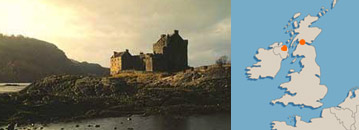
From the Border regions adjoining England throughout Dumfries and Galloway, Ayrshire, Lanarkshire, the Lothians, Fife, Stirlingshire, Perthshire, Angus, Aberdeenshire, Buchan, Moray and the Northern Isles of Orkney and Shetland Scots is spoken in a variety of dialects.
In Ulster, Ulster Scots speakers are found in all parts of the north of Ireland but the main concentrations are in Counties Down, Antrim, north and west Londonderry, north and west Tyrone and spilling across the border into east Donegal in the Republic of Ireland.
Updated, sourced data, checked on 14 October 2026 · scope : Royaume-Uni (Écosse) · Get updates for this language
Numerical strength
2022 Scottish Census: 2,444,659 people, or 46.2% of the population aged 3 and over, have some Scots skills, up from 37.7% in 20111,2. Just under half of them speak, read and write it; over 720,000 understand it only1.
The North East has the most speakers (420,000); the Banffshire and Buchan Coast constituency has the highest share (72%) and Edinburgh Central the lowest (28%)1.
Status
Education
Miscellaneous
The Scottish Government allocated £35.7 million in 2025 to Gaelic and Scots initiatives, and may commission research into their use2.
Sources
- Gaelic and Scots in Scotland – what does the census tell us?, SPICe – Scottish Parliament Information Centre (A. Aiton, N. Sharratt), 2024.
- Growing Scotland's languages (communiqué : statut officiel du gaélique et du scots), Scottish Government, 2025.
- Scottish Languages Act 2025 (asp 10) – table des matières, legislation.gov.uk, 2025.
02. Poem
Translation: Lingualia (2026)
03. Linguistic description
Scots is a Germanic language, a sister of English2. It descends from Old Northumbrian, a dialect of Old English, whereas Standard English comes from another dialect, Mercian1. Among the Romance languages, French, first Anglo-Norman in the 12th-14th centuries, left the strongest mark on its vocabulary1.
Sources
The 2003 CD had no description of this language: this text was written for the site from the sources below.
- C. Macafee, A. J. Aitken, « A history of Scots to 1700 », Dictionaries of the Scots Language (d’après A Dictionary of the Older Scottish Tongue, vol. XII), 2002.
- Glottolog 5.3 – Scots, Max Planck Institute for Evolutionary Anthropology, 2025.
04. Cartoon
No cartoon in this language could be found on public video platforms.