

01. Data about the language
Language group
Finno-Ugric / Ugric
Area
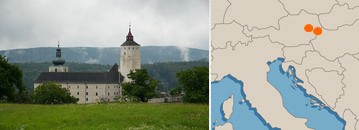
In addition to a considerable number of speakers in Vienna the majority of the Burgenland Hungarians live in four big Hungarian linguistic enclaves:
- Oberpullendorf/ Felsöpulya, - Oberwart/Felsöör, - Siget in der Wart/ - Örisziget, Unterwart/ Alsóör.
Hungarians from that region are the descendants of the Grenzwächter – borders warders- who were due to protect the territory against Mongol invasions. Thanks to that mission, they received privileges from the kings of Hungary. After the ravages of the Turkish wars (XVIth), Burgenland was peopled by Croats and Germans and Hungarian communities turned to linguistically islands, secluded from other Hungarians. After World War I, the province was divided between Austria and Hungary.
Updated, sourced data, checked on 14 October 2026 · scope : Autriche (Burgenland, Vienne)
Numerical strength
Status
In Austria, the language is protected by Parts II and III (Articles 8 to 14) of the European Charter for Regional or Minority Languages in Burgenland, within its language area defined by the Ethnic Groups Act (Volksgruppengesetz)1. Federal support for the ethnic groups was doubled from 2021 and reached €7.6 million in 2023 for the Federal Chancellery alone1.
Public services
Under the Ethnic Groups Act, the area where Hungarian is an official language comprises the municipalities of Oberpullendorf/Felsőpulya, Oberwart/Felsőőr and Unterwart/Alsóőr, and the locality of Siget in der Wart/Őrisziget1.
Education
The Burgenland Minority Schools Act allows every pupil to be taught in Hungarian1. In 2023–24, about 11% of Burgenland primary pupils (1,258 pupils) were taught in Hungarian, against 1.8% (225) in 1995–96; this teaching took place in schools in 52 municipalities, well beyond the official area1. 555 children were cared for in Hungarian in early-childhood settings in 2023–241.
Media
Since September 2022 the ORF has produced the fortnightly TV magazine "WIR | Češi, Hrvati, Magyarok, Roma, Slováci, Slovenci", broadcast on ORF 2 and ORF III in the ethnic-group languages with German subtitles; in 2024, ORF Burgenland and ORF Carinthia produced about 100 hours of television and over 4,000 hours of radio in these languages1. Since 2021 one "lead medium" per ethnic group has received specific federal funding1. For the Hungarians, this lead medium is the online platform Rólunk – Ausztria Magyar Oldalai; ORF Burgenland produces over three hours of Hungarian radio a week and broadcasts the TV magazine Adj' Isten magyarok six times a year1.
Sources
- 6. Bericht der Republik Österreich gemäß Artikel 15 Absatz 1 der Europäischen Charta der Regional- oder Minderheitensprachen (état au 1er octobre 2025), Bundeskanzleramt (Chancellerie fédérale d'Autriche), 2025.
02. Poem
03. Linguistic description
Official language of the Hungarian Republic, the Hungarian language is the twelfth European official language. It is the mother tongue of about 15 million people, and approximately 2 million people speak it as a second language. According to estimates it stands in the 30th-35th position of the languages spoken throughout the world and speakers of Hungarian amount to 0.3% of the world population. Hungarian minorities have settled in the countries sharing borders with Hungary, in Western European countries, as well as in the USA, in Canada, in Australia and even in South Africa.
In 2000, Hungarian is offered as an academic subject in 36 universities in 21 countries.
Hungarian does not belong to the Indo-European linguistic family; there is no linguistic kinship between Hungarian and Germanic, Romance or Slavic languages. It is a Finno-Ugrian language. In that respect, it linguistic kin can be found beyond its immediate geographic location: Finnish and Estonian in Europe as well as several other languages of the Russian territory. These languages, along with the Samoyed languages spoken mainly in Siberia, constitute the Uralian language family (Classified from the closest to the most linguistically remote, these languages are: Vogoul, Ostiak, Votyak, Mari, Mordve, Sami, Nenet, etc ) The kinship of these languages is manifest in a number of obvious still surviving linguistic similarities. Yet without a language learning process, and despite an ancient common vocabulary, there is no mutual intelligibility between the speakers of Hungarian and the speakers of the other languages of this family. This ancient common vocabulary has bequeathed verbs expressing basic actions (lesz/to be, élni/to live, enni/to eat, menni/to go, etc), nouns denoting the parts of the body (szív/heart, kéz/hand, száj/mouth, etc), objects or natural phenomena (fa/trre, hal/fish, víz/water, hó/snow, ég/sky, etc) words relating to spatial and temporal location (alatt/under, mögött/behind, etc), as well as numbers (kettõ/two, négy/four, száz/one hundred) and pronouns (ki/who/which/that, mi/which/that, ez/this, az/that, én/me, etc) .
Later loan-words come from better known European languages (Words with a Slavic origin: király /king, megye/committee, pap/priest, etc; words coming from Latin: templom/church, mise/mass, iskola/school, etc; words with a Germanic origin: püspök/bishop, csap/tap, etc)
The Hungarian language has a long literary written tradition that began at the time of Old Hungarian, and extended from the conquest of the country (896), respectively the foundation of the State and the conversion to Christianity under the rule of King Saint Stephen and up to 1526 (Mohács's defeat). This event was lethal to the European kingdom that until then proved strong enough to resist intensive and repeated Ottoman attacks. It entailed the partition of the country into three parts: the south and the capital passed under Turkish rule, the west and the north under Austrian rule, and only Transylvania ???and its surroundings succeeding in retain relative independence. As a consequence of that partition as well as of the spread of print industry, and following the translations of the protestant and catholic Bible, regional centres were created for the promotion of the Hungarian culture and language, which today have retained their strengths as vectors of identity.
The first written text containing Hungarian words is the founding letter of the Abbey of Tihany, in 1055. The first text written entirely in Hungarian (the Funeral Oration) dates back to the end of the 12th century, whilst the first poem, The Lament of Mary, dates from the early 13th century. Renaissance Hungarian literature was significantly influenced by the poetic works of Europe-wide famous humanist Bálint Balassi.
The conflicts for the re-unification and independence of the country correspond to the Middle Hungarian period (late 18th century). The Enlightenment and the Periods of the Reforms coincided with a linguistic event: the reform of the Hungarian language. Famous nineteenth century writers' works XIXe (poets: Mihály CSOKONAI VITÉZ, Ferenc KÖLCSEY, Mihály VÖRÖSMARTY, along with Sándor PETÖFI or János ARANY; and writers like Mór JÓKAI, Kálmán MIKSZÁTH) have significantly contributed to the elaboration of standard literary Hungarian.
The promoters of linguistic reforms still condemned borrowings from foreign languages. Still, contemporary Hungarian possesses a very large number of neologisms that mainly came from English.
Acoustically, Hungarian is stressed on the initial syllable. Specific linguistic laws determine its vocalic harmony, such as for instance the lack of correlation between the duration of vowels and the stress.
From a typological viewpoint, Hungarian is an agglutinate language: its grammatical relations are rules through the adjunction of suffixes to the stem. Though words might then seem exaggeratedly long, this characteristic allows for subtle semantic distinctions.
Hungarian has no grammatical gender; articles and epithet adjectives do not follow a pattern of declination. The oppositional character of the triple-directionality of suffixes marking location contributes to the richness of the language's expressional power. The verb to have does not exist; furthermore, Hungarian possesses few verb tenses (present; past; future). It belongs to the SOV (Subject-Object-Verb) language category.
The Hungarian language allows for both classical and stressed verse patterns.
Estimates claim that Hungarian words amount to more than one million.
04. Cartoon
Video hosted on YouTube and published by the channel shown; its author may remove it at any time.