
Languages · Indo-Iranian languages
Romani

01. Data about the language
Language group
Indo-European / Indo-Iranian
Area
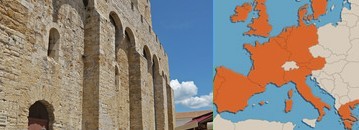
The Rom minority is spread all through Europe. The available information about Romany concerns the situation of Romany in Finland and in Austria.
Finland :
Throughout the country Austria :
The primary traditional area of settlement is Burgenland, as well as Vienna and Lower Austria. Sinti and Lovara, which make up the remaining part of the ethnic group, live almost exclusively in urban centres.
Updated, sourced data, checked on 14 October 2026 · scope : Situation européenne et mondiale ; détails pour la Finlande, l'Autriche et la Suède
Numerical strength
Europe and worldwide: on the most conservative estimate, Romani has upwards of 3.5 million speakers in Europe and upwards of 500,000 in the rest of the world; the actual number is probably much higher4. The University of Helsinki puts it more likely between 10 and 20 million5. The largest speaker populations live in south-eastern Europe, notably in Romania, Bulgaria, Turkey, North Macedonia, Serbia and Montenegro4.
Finland: about half of Finnish Roma have satisfactory skills in Romani (Kale), and only a third speak it fluently5.
Austria: The last census to record the language of everyday use ("Umgangssprache") was in 2001: 4,348 Austrian citizens then declared Romani (Romanes)2. Register-based censuses, since 2011, no longer collect this information2.
Sweden: in 2023–24, 2,323 compulsory-school pupils were entitled to mother-tongue tuition in Romani Chib3.
Status
Finland: The Finnish Constitution (Section 17) guarantees the Sámi, as an indigenous people, as well as the Roma and "other groups" the right to maintain and develop their own language and culture1.
Austria: Romani is protected by Part II of the European Charter for Regional or Minority Languages2. Federal support for the ethnic groups was doubled from 2021 and reached €7.6 million in 2023 for the Federal Chancellery alone2.
Education
Media
Austria: Since September 2022 the ORF has produced the fortnightly TV magazine "WIR | Češi, Hrvati, Magyarok, Roma, Slováci, Slovenci", broadcast on ORF 2 and ORF III in the ethnic-group languages with German subtitles; in 2024, ORF Burgenland and ORF Carinthia produced about 100 hours of television and over 4,000 hours of radio in these languages2. Since 2021 one "lead medium" per ethnic group has received specific federal funding2. For the Roma, this lead medium is the daily one-hour programme "Romani Ora" on Radio Mora (€183,400 for 2024–25); the ORF also broadcasts the magazine Romano Dikipe2.
Sources
- Constitution of Finland (731/1999), traduction anglaise non officielle, section 17, Finlex, ministère de la Justice de Finlande, consulté en 2026.
- 6. Bericht der Republik Österreich gemäß Artikel 15 Absatz 1 der Europäischen Charta der Regional- oder Minderheitensprachen (état au 1er octobre 2025), Bundeskanzleramt (Chancellerie fédérale d'Autriche), 2025.
- Sweden's 9th Report to the Council of Europe under the European Charter for Regional or Minority Languages, Government Offices of Sweden (Regeringskansliet), Ministry of Culture, 2026.
- Y. Matras, « The status of Romani in Europe » (rapport pour la Division des politiques linguistiques du Conseil de l'Europe), University of Manchester, 2005.
- Romani and Roma culture, Université d'Helsinki, Faculté des arts, consulté en 2026.
02. Poem
03. Linguistic description
Romani is an Indo-Aryan language, related to Hindi or Bengali1. This Indian origin was demonstrated as early as 1782 by Johann Christian Christoph Rüdiger1. The word rom means 'man, husband' (not 'human being'), and Roma is its plural1. The vocabulary bears traces of history: Slavs are called das, from an Indic word meaning 'slave', inspired by the likeness of Greek sklavos ('slave') and slavos ('Slav')1.
Sources
The 2003 CD had no description of this language: this text was written for the site from the sources below.
- D. W. Halwachs, « Romani – An Indo-Aryan Language of Europe », Factsheets on Romani Language 1.0, Conseil de l’Europe / Romani-Projekt Graz.
04. Cartoon
Video hosted on YouTube and published by the channel shown; its author may remove it at any time.