

01. Data about the language
Language group
Indo-European / Romance
Area
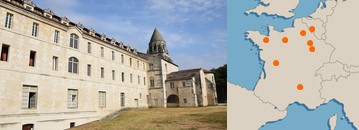
*Picard is spoken in the administrative regions of Picardy and Nord-Pas-de-Calais
*Norman in Haute- and Basse Normandy
*Gallo in the Eastern parts of Brittany
*Poitevin-Saintongese in the administrative regions of Poitou-Charentes and in the Vendée 'Département' and in Northern Gironde (Aquitaine region)
*Champenois in the administrative region of Champagne-Ardennes
*Morvandiau throughout the Morvan region (in parts of the Nière, Yonne, Côte-d'Or and Saône-et-Loire Departments)
Even though it is referred as Oil languages, this is no clear linguistic definition. Linguists from Renaissance just realized that on some northern parts of the French kingdom the word "yes" was pronounced "Oil". This came from an antique spelling, the word indeed should be pronounced "oui". In the southern parts of the kingdom, it was pronounced "oc".
The difference between oil and oc languages, is still valid, even if it was originally based upon such an approximate criteria.1 Oil languages are actually part of the same linguistic family. One of this Oil language, French from Ile de France (Paris and surrounding area) became the written standard, and then slowly the oral standard for the whole concerned area.
The other Oil languages were then marginalized by this standard French ; Picard, Walloon, Gallo, languages from Poitou, from Champagne... Some had previously known an intensive cultural activity (Picard was the written standard of Oil, before French) and were pushed back as a spoken language
There has been a sort of renewal for these languages for the last 20 years : creations in literature and theatre . They are now strongly dialectalised in their own area, and therefore the challenge of their survival comes from the creation of a written standard.
1 After all "oui" (yes) is said "ya" in Breton (Celtic language) and "ja" in German (Germanic language)
Updated, sourced data, checked on 14 October 2026 · scope : France (picard, Hauts-de-France) ; Belgique (wallon, picard, gaumais, champenois en Wallonie)
Status
France: the Constitution states that "the language of the Republic is French" (Art. 2) and that "regional languages belong to the heritage of France" (Art. 75-1)5. France signed the European Charter for Regional or Minority Languages on 7 May 1999, but the Constitutional Council ruled that it contained clauses contrary to the Constitution8. Law no. 2021-641 of 21 May 2021 includes regional languages in the linguistic heritage protected by the Heritage Code6; the Constitutional Council struck down two of its articles, on immersion teaching and on diacritical signs in civil registers7.
Picard: the Picardie Region supported Picard from the 1990s; the Hauts-de-France Region, created by the 2016 merger, has continued this policy and funds the Agence régionale de la langue picarde1. The language pact signed in 2020 with the Ministry of Culture commits the Region to supporting an initiative for Picard equivalent to the public office planned for West Flemish2. In popular perception, the former boundary between Picardie and Nord-Pas-de-Calais separates the "Picard language" from "ch'ti", seen rather as an accent1.
Belgium: the French Community decree of 24 December 1990 recognises the linguistic and cultural specificity of speakers of the endogenous regional languages; these languages belong to the Community's cultural heritage, which must foster their scientific study and use3. Belgium has not signed the European Charter for Regional or Minority Languages; the Wallonia-Brussels Federation has supported it since 19924.
Public services
France: the 2021 law allows public services to display translations into the regional language on public buildings, roads, transport infrastructure and their main communication materials6; however, the Constitutional Council held that a provision granting individuals a right to use a language other than French in their dealings with the administration was contrary to Article 2 of the Constitution7.
Belgium: on the initiative of the Wallonia-Brussels Federation, municipalities join the label "My municipality says yes to regional languages", with a charter of commitments; on 14 June 2022 Fosses-la-Ville and thirteen other municipalities joined, and every office of its administration now displays a sentence in Walloon4.
Education
France: the 2021 law provides that, under agreements between the State and the regions, the regional language is a subject taught within normal school hours, so that it can be offered to all pupils6. Following this law, a Ministry of Education circular has allowed Picard to be taught at school since 2021, with the support of associations1.
Sources
- N. Caput, « La région, une échelle de valorisation des langues minoritaires ? La cause du picard et du flamand occidental en Hauts-de-France » (thèse de géographie, avis de soutenance et résumé), Université d'Artois, 2025.
- Signature d'un pacte linguistique dans les Hauts-de-France, Ministère de la Culture, DRAC Hauts-de-France, 2020.
- Communauté française de Belgique – Décret relatif aux langues régionales endogènes du 24 décembre 1990 (texte), L'aménagement linguistique dans le monde, CEFAN – Université Laval, consulté en 2026.
- « Ma commune dit oyi » (brochure communale sur le label « Ma commune dit oui aux langues régionales »), Ville de Fosses-la-Ville, 2022.
- Constitution du 4 octobre 1958 (texte intégral en vigueur), Conseil constitutionnel, consulté en 2026.
- Loi n° 2021-641 du 21 mai 2021 relative à la protection patrimoniale des langues régionales et à leur promotion (texte publié au JO n° 119 du 23 mai 2021, reproduit dans le recueil des travaux préparatoires), Légifrance ; ministère de la Culture, 2021.
- Décision n° 2021-818 DC du 21 mai 2021, Conseil constitutionnel, 2021.
- Décision n° 99-412 DC du 15 juin 1999 — Charte européenne des langues régionales ou minoritaires, Conseil constitutionnel, 1999.
02. Poem
03. Linguistic description
The Oïl languages, such as Walloon, Picard or Gallo, belong, like French, to the Oïl group of Romance languages1. In Walloon, the coining of new words has been divisive for decades: dialectologists attached to traditional forms are opposed to supporters of a common spelling, the rifondou walon, who notably created a computing vocabulary2.
Sources
The 2003 CD had no description of this language: this text was written for the site from the sources below.
- Glottolog 5.3 – Walloon, Max Planck Institute for Evolutionary Anthropology, 2025.
- M. Francard, « La création néologique dans les parlers romans de la Wallonie. Une nécessité controversée », Neologica 17, Classiques Garnier, 2023.
04. Cartoon
Video hosted on YouTube and published by the channel shown; its author may remove it at any time.