
Languages · Romance languages

Friulian

Spoken in : Italy

01. Data about the language

Language group

Indo-European / Romance

Area

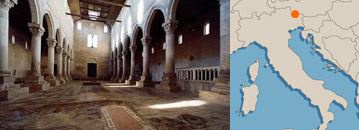
Friulian (or Eastern Ladin) is spoken in the provinces of Udine, Pordenone and in parts of the province of Gorizia and of Venice.

The history of the Frioulan language goes back to antiquity : it comes from the influence of Latin over the Celt population of the region. Frioulan is one of the rheto-roman languages that one could find in South Tyrol or Switzerland.

From the XIth century to 1420, Frioul was headed by the Patriarchs of Aquileia, and then by the Republic of Venice.

This language kept its roman identity through the centuries, in spite of the Slave and Germanic invasions. It is still nowadays well rooted among the population. Its geographical anchoring at the North-East periphery of Italy, somewhere between the Slave world and the German World, preserved the language and enhanced the development of specific traits.

There are very ancient texts in Frioulan, going back to the XIIth century, and on the other hand, Frioul can claim one of the richest and most precious popular literature in Italy.

Updated, sourced data, checked on 14 October 2026 · scope : Italie (Frioul-Vénétie Julienne, Vénétie orientale)

Numerical strength

According to the "Tire fûr la lenghe" survey, carried out from April to June 2023 by IRES FVG and FEF with ARLeF's support (over 4,300 interviews in 178 municipalities), Friulian is actively spoken by 444,000 people, more than half of the residents of the municipalities declared Friulian-speaking in Friuli Venezia Giulia and eastern Veneto; there are about 700,000 including those who only understand it1. It is spoken by 40% of respondents in Udine, 23% in Gorizia and 18% in Pordenone1.

Transmission: 51% of respondents name Friulian as their parents' main language, and 44% speak it with their mother, as with their father1.

The previous survey (University of Udine, 2014) counted 600,000 speakers in the provinces of Gorizia, Pordenone and Udine, 420,000 of them regular speakers2.

Status

Friulian is protected by Friuli Venezia Giulia regional law 29/2007, which governs, among other things, its teaching3. Language policy is carried out by the regional agency ARLeF under the General Language Policy Plan for Friulian 2021–20251.

Public services

According to the 2023 survey, the use of Friulian has yet to establish itself fully in public offices and dealings with municipal administrations; 42% of respondents list it among the "desirable" official languages in local administration1.

Education

The Region funds Friulian teaching in schools under regional law 29/2007; schools draw primarily on teachers registered on a regional list of recognised competence in teaching Friulian3. Nearly 70% of respondents in 2023 wanted a greater presence of Friulian at school1.

Media

According to the 2023 survey, Friulian is used above all on instant messaging platforms: one person in four uses it in voice messages1.

Miscellaneous

In 2023, 52% of respondents described themselves as "very" Friulian (75% including "fairly"); 77% approved of public funding to support the language1.

02. Poem

Listen to the poem

Restored version (background noise reduced, level evened out) · 1:02 · Download · unprocessed original (MP3 44,100 kHz, stereo)

Original Translation
Autonomie dal spirit
Freedom of spirit
S’o cjapais puest sun tune des otante, o passe, corieris che ogni sere, tra lis quatri e lis sîs, ‘e partìssin di Udin e si sparnìzzin par dutis lis stradis dal Friûl, rivant fintremai sui cunfins de “Patrie”, ‘o podaressis visâsi di une cjôse che merte studiade. Al moment de partenze, la plui part de int montade sù ‘e strambolote par talian: un talian straordenari, grîf, pesant, imberdeât, sgramaticât, cun inflessions e cadenzis; un talian cence consonantis doplis e cu lis vocâls strissinadis, cjantadis, slumbriadis; un talian pegri, sudizionôs, malsigûr, fevelât, par solit a mieze vôs. Ma, par òrdin che si slontanisi de “capitâl” e che si làssin pe strade chei dai paîs plui dongje, par ordin che la int ingrumade si srarìs e si comòde su lis sentis, la musiche ‘e va gambiansi.
If you get on one of the eighty or more coaches that every evening between four and six leave from Udine and travel along all the roads of Friuli, arriving up to the borders of the "patria", you can witness a phenomenon that is worth studying. At the moment of departure, the majority of the passengers mumbles in Italian: a very peculiar Italian for that matter, difficult, heavy, entangled, ungrammatical, with inflections and cadences; an Italian without double consonants and with dragged, sung and stretched vowels; a lazy, shy, uncertain Italian, usually spoken in a low voice. But as the coach gets away from the "capital" and leaves off those who live in the neighbouring towns, the passengers slowly, and perhaps undertone, begin speaking Friulian, a Friulian which is still faint and insipid, mixed with Italian, learned and strained.
Si comenze planc planchin a fevelâ par furlan, magari sotvosvìe; un furlan ancjemò svampît e lami, messedât cul talian, studiât e sfuerzât. E co’ no rèstin su la coriere altri che i abitanz dai paisùz e cjasai plui lontans, al pâr che a duc’ al sei tornât il flât, ‘e alzin la vôs, ‘e discòrin franc e cence sudizion, e no si sint plui une paraule di talian. Il lengaz di cheste int al è un furlan sclet, sigûr, culurît, al è une musiche svereade cun dutis lis ghenghis e lis cjantilenis di ogni paîs, di ogni cjanâl, di ogni localitât. Par cui ch’al à cundizion e gust di chestis robis, chest lengaz al è veramentri interessant, al è une meravèe. Ogni moment ‘e ven fûr une paraule rare, une butade gnove, une plèe dal discors frescje e indivinade, une sclamazion insolite. Chei omenuz, ches feminis, chei fruz che prime, talianant, ‘e parevin ingredeâz tun barazzâr, cumò che cjantin la lôr lenghe ‘e semèin pujeris che corin a brene viarte sun tun prât.
Yet, when the inhabitants of the of the most far-off towns and suburbs remain alone on the coach, it seems that everyone has re-found his breath; they speak up, talking freely and without embarrassment, and no Italian word can be heard anymore. The language of these people is a natural, confident, and coloured Friulian; it is a music rich of all the inflexions and intonations of every town, valley, and place. For those who are fond of these things, this language is very interesting and a real wonder. Rare words, as well as new expressions, fresh and pertinent speech patterns, and uncommon exclamations, continuously come out. Those very men, women, and children, who had first seemed entangled in a bramble thicket when they spoke Italian, now that they sing their language, seem sheep who run bridle-less on an open field.
S’al capite di fâ il viaz de ledrôs – de perifarìe in zitât – ancje il gambiament de lenghe al sozzêt al incontrari. La int, che in partenze ‘e fevelonave cence riuarz tal so lengaz, par ordin che si vizìnisi al capolûc e che mòntin sù chei dai paisòz centrai, si cujete, si spaurìs, ‘e disbasse la vôs, ‘e tache a piconâ par talian: talian paralitic, bastart, mostruôs, talian ch’al fâs dûl ai clas. I furlans ‘e àn pôre di jessi ridûz e cojonâz se fevèlin a lôr mût; ‘e àn pôre di semeâ sclapezòcs, int indaûr e ignorante, di fâ brute figure, di fâsi ridi in ghigne. Invezzi ‘e devèntin pardabon ridicui fasìnt in cheste maniere. Se vèssin il spirt di stâ sul lôr jessi, di mostrâsi ce che son, di fevelâ a muse viarte, cun francjezze e cun disinvulture, il lengâz imparât di lôr mari, nissun ju cjolares pal cûl, nissun vares nuje ce dî, nissun si dares di maravèe, nissun olsares nancje fâ bocje da ridi, fûr di qualchi biât dordel, ignorant e curt di comprendoni che nol merte nancje cjalât in muse. E cheste disgraziade mentalitât, ce in tune maniere ce in chealtre, la mòstrin squasi duc’, ancje chei di zitât, ancje chei plui dispatussâz, plui inscuelâz e plui sigûrs di sè: tal discori, tal resonâ, tes impinions e tal mût di fâ e di cumpuartâsi.
If you happen to travel the other way round, from the suburbs toward the city, the language change also occurs inversely. The people who initially speak their language freely calm down; frightened they lower their voice and begin mumbling in Italian as they get closer to the capital and as people from the central towns get on: their Italian is paralytic, bastard, monstrous, an Italian even rocks would pity! Friulians are afraid to be ridiculed and teased if they speak their language: they are afraid to seem rude, ignorant and backward, and to cut a bad figure, to be laughed at. Instead they become really ridiculous in doing what they do. If they had the spirit to be their selves, to show themselves as they are, and to speak the language they have learned from their mothers openly, frankly and naturally, no one would tease them or would have anything to say, no one would be surprised and no one would even dare to laugh, with the exception of some poor, ignorant blockhead who does not deserve to be paid attention to. Who in one way or another, almost everyone shares this stupid mentality, with no exception either among city people, or among the more emancipated, the more educated, and the more self-confident: it emerges from their conversations, thoughts and opinions, as well as from their way of doing and behaving.
Cuintri di cheste debulezze noaltris ‘o scombatìn dopo in ca, in dutis lis manieris, cu lis peraulis e cui faz: ‘o cirìn di dismovi ta l’anime de nestre int un fregul di sigurezze, di francjezze, di muse rote, un fregul di dignitât e di cussienze etniche, un fregul di chel sintiment che i nostris viej ‘e àn simpri vût, fin quant ch’al è rivât chenti il talian a mortificânus e umiliânus cu la sô borie, cu la sô sbatule e cu la sô invadenze. Al è un lavôr intrigôs il nestri, ma necessari: fintremai che il furlan nol varà imparât a mostrâ la sô muse cence rispiet uman e cence deventâ ros, nol sarà madûr par governâsi di bessôl; e al sarà di bant pridicjâ autonomìis e imbastî statûz regjonai. L’autonomie si à di vêle prime di dut tal zerviel e ta l’anime e dopo si podarâ pratindile tes lez e tai ordenamenz.
Against these weaknesses, we have been fighting for many years and in every way, with words and facts: we have tried to awaken in our people a bit of security, frankness, and nerve as well as a bit of dignity and ethnic awareness, a bit of that feeling that our elders have always had since Italian arrived to mortify and humiliate us with its arrogance, loquacity and intrusiveness. Ours is a difficult but necessary task: until Friulian learns to show its face without blushing and without human respect, it will not be mature enough to self-govern itself; and it will also be useless to talk about autonomies and to plan regional statutes. We must first of all establish autonomy in our minds and hearts and then we can demand it in laws and regulations.
Josef Marchet (magazine “Patrie dal Friûl”, 1947)

03. Linguistic description

Friulian is a Neo-Latin language currently spoken by 430.000 people in Friuli, an area of the Friuli Venezia Giulia Region, which is located in the north-east of Italy, on the border with Austria and Slovenia. The figure refers to more or less 60% of the region's inhabitants. Moreover, there are many Friulians who, scattered throughout the globe, can and do speak this language, so as not to forget their origins and culture. This language traces back to the XIII century and finds its distinguishing traits in both the evolution of Latin and the influences from the Slavic and German languages, which are due to the fact that Friuli has always been a border region and, as such, a land of invasion and conquest in the course of the centuries. It presents many similarities with the Ladin dialects spoken in the Swiss Canton of the Grisons and in Belluno. From the following chart, it is clear that Friulian is strongly characterized by all three language groups, while having its own individuality.

FRIULIANLATINITALIANSLOVENEGERMAN
MiluçMalummelaJabolkoApfel
MêsMensismeseMesecMonat
VieliVetusvecchioStarAlt
JessiSumessereBitiSein

Its individuality is marked by specific characteristics, as well as by distinguishing grammatical traits, a diverse historical genesis from the other languages, a literary tradition which began in the XIV century and has continued uninterruptedly to the present day, an intrinsically unitary koine despite the addition of many varieties, and the consciousness on the part of its speakers that it is a language. The regional law that safeguards Friulian dates back to 1996, while in 1999 the Friulian language was also recognized as such by the Italian government. Its juridical defence sanctions that Friulian can be used in public offices, in schools, and in means of communication.

04. Cartoon

LA MARIUTINE storiute contade in furlan
Cartoon · 5 min 36 s · channel: CARTONI ANIMATI di Donatella Stocco · YouTube

Video hosted on YouTube and published by the channel shown; its author may remove it at any time.