
Definitions · 2/6
What is an 'official' language?
An official language is a language that can be used in dealings with public authority
and in official documents (including commercial documents).
In many countries in the European Union Several official languages can be found.
One must also distinguish between several degrees of language official-ness according to whether the use of a particular language in such or such context is possible or compulsory.
In a more concrete way, more than 40 autochthonous languages are spoken on the current territory of the European Union. EU institutions have recognised 11 of these as official languages, which means for instance that the Union's citizens must use one of these languages when they address the European institutions and that, conversely, the latter must respond in the chosen language. Of course this does not preclude other institutions at other levels of society (State, regions, cities, etc) from officially recognising other languages.
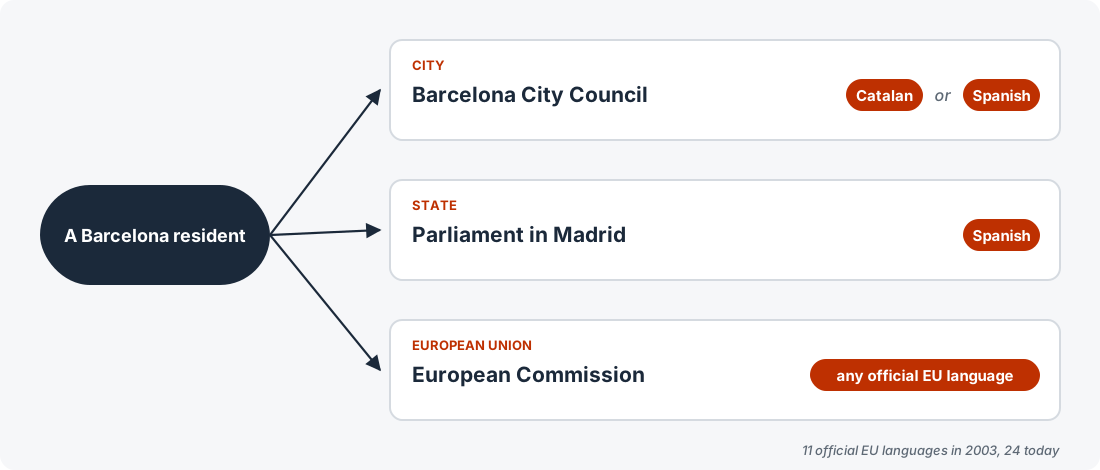
As an illustration, a Barcelonian can conduct dealings with Barcelona's civic services in Catalan or in Spanish, must address Madrid's Parliament in Spanish, and can communicate with the European Commission in any of the eleven EU official languages.
A language can be taught and used and yet not enjoy official status. This is actually the case for many lesser-diffused languages. However, one must acknowledge that without a minimum degree of official recognition, the numerical strength of a language tends to decrease and jeopardise the survival of that language.